Mexico looks for child geniuses

Standard

Here’s a link to my most recent article on AQBlog, titled “Mexico looks for child geniuses”

http://www.americasquarterly.org/node/2126

Date published: Jan 19th, 2011 I hope you find it interesting. Please feel free to comment.

Here is a copy of it:

____________________________

The Secretaría de Educación Pública or SEP (Ministry of Education) in Mexico has traditionally been known for being slow, over-bureaucratized and square-minded. Low quality levels are reflected year after year through a series of international comparative studies. One need only consult the results of the PISA (Programme for International Student Assessment) to see in disgust how Mexico’s constant is to come up last in the OCDE countries year after year.

Vidal Garza, a friend and editorialist for a major newspaper in Mexico, writes that the problem is even more apparent when you look at the amount of money we spend on our public schools: “Mexico invests 5 percent of its GDP on public education. The average annual expense per student in elementary school is $1,604, yet we fare deficiently in PISA. We do worse than Uruguay, Chile and China, which actually spend a lot less per student.”

To make things worse, The SEP (and Mexico as a whole) is in a constant battle with the SNTE, Sindicato Nacional de Trabajadores de la Educación, a corrupt teacher’s union that promotes strikes and teacher absenteeism as a the means to advance a political agenda. SNTE has filled our public schools with undedicated, unqualified and mediocre people who should not even have the honor of being called “teacher.” Granted, this is a generalization but a real one. I have met a couple of very good teachers in the public system; unfortunately today they are a rare breed.

It is no secret that we need to improve productivity in terms of education in Mexico. That’s why I was pleased to see a spark of progressive thinking on the part of SEP when I learned that they will be instituting a program to identify overachievers and children with higher intellectual proficiency in elementary schools with the intent to “credit, promote and advance them” in an accelerated manner. For example, if a child in 3rd grade shows the intellectual capacity of a 6th grader, the program will identify, prepare and eventually advance him/her to a 6th grade classroom. SEP estimates that around 10 percent to 15 percent of kids could benefit from this program. 

This is great news for the smarter kids. It is not my intention to brag, but when I was in elementary school I always felt that I was being held back in the classroom. For a child with thirst for knowledge, there is nothing less stimulating than learning at a slow pace or having to go over the same material he/she already knows by heart because others take longer to understand it. These 10 to 15 percentile smart kids need to catalyze their capabilities and be inserted into a more challenging setting. It is great to see that SEP is finally working to do something about it. According to the theory of evolution, if an organ is not being used, it ends up atrophying. I am a firm believer that an under-stimulated brain does not develop to its full capacity and now smarter kids will have a better shot.

I do however have to play devil’s advocate and point out some important side issues that should not be overlooked:

1. In transferring kids to a higher-grade classroom, the program needs to make sure that these younger, smart kids do not become the target of bullying by the older kids. Also, they need to not only have the intellectual skills, but the emotional intelligence to be in a classroom with older kids.
2. The crash-course preparing a child for a higher grade will NEVER substitute the social interaction with his/her peers vs. being inserted into an older social setting. Hopefully the psychological implications of these changes are being observed as part of the program, especially in regard to the early puberty stages.
3. Advancing a smart child has important implications in regard to the rest of the class. The smart kid sets the bar for the rest in the group. He/she becomes the one to beat when it comes to getting good grades. If they are set aside from children their own age, what will happen to the “average” kids? Does the program take this risk of further promoting under-achievement into account?
4. When the smart child graduates from middle school and is ready to enter university level (here or abroad), we have to make sure that he/she will not be denied access due to young age. Let’s make sure we are not breeding child geniuses who will have to wait to continue their studies.
5. The generalized problem with education is not that we are holding back child geniuses (after all, on their own estimations these amount to 15 percent of the kids at most) but that our teachers are inadequate. If you advance a 3rd grader to a 6th grade classroom with a mediocre teacher, you cannot expect that our PISA standings will improve. Granted, you are helping the individual child in some way, but the bigger issue still needs to be addressed.

This list of issues is by no means exhaustive. I am sure you can think of some others and hopefully SEP is thinking about them also. The point is that this program is a small ray of hope for our future in education. Now if we could only figure out a way to get rid of the SNTE…

*Arjan Shahani is a contributing blogger to AmericasQuarterly.org. He lives in Monterrey, Mexico, and is an MBA graduate from Thunderbird University and Tecnológico de Monterrey and a member of the International Advisory Board of Global Majority—an international non-profit organization dedicated to the promotion of non-violent conflict resolution.

A New Year’s Resolution for Mexico

Standard

Here’s a link to my most recent article on AQBlog, titled “A New Year’s Resolution for Mexico” http://www.americasquarterly.org/node/2075

 Date published: Jan 5th, 2011 I hope you find it interesting. Please feel free to comment.

Here’s a copy of it:

____________________

Mexico is the second most corrupt country in Latin America. That’s not an award countries usually strive for but it is, according to UNAM’s Instituto de Investigaciones Sociales (the National Univeristy’s Social Research Institute, or IIS), the disgraceful situation Mexico finds itself in at the start of 2011.

On January 3, UNAM released a press package in which they declared that according to Transparency International’s Corruption Perception Index and the Latinbarómetro indicators, Mexico is only led by Haiti as the most corrupt nation in the region. IIS’s Corruption and Transparency Research Coordinator Irma Eréndira Sandoval Ballesteros explained that throughout Latin America “Mexicans are considered extremely corrupt in terms of public and private practices.”

TI’s 2010 Corruption Perception Index report explains that 75 percent of people believe that Mexico’s corruption has increased in the last three years. Political parties, police, Congress, and the judiciary top the list of corrupt institutions in our country (considered extremely corrupt), followed by media, businesses, organized religion and NGOs.

Sandoval Ballesteros reported that while the 2003 creation and further strengthening of IFAI (Instituto Federal de Acceso a la Información y Protección de Datos, Federal Institute for Information Access and Data Protection) has been a significant progress in terms to access to information, transparency has done little in battling corruption and has been marginally useful in creating a public conscience. In her own words, “if Mexico is not a leading nation in political and economic terms, it is because corruption has not allowed it and has become an obstacle to possible progress.”

According to Transparency International, 50 percent of the people surveyed in their 2010 report worldwide consider that anticorruption policies put forth by government are and will be ineffective. This number is rather conservative for Mexico if you look back at recent history and try to identify one big successful case of combating corruption by our government (hint: there are none). This leaves us with an unavoidable truth: lowering corruption levels cannot be left up to the government. Each and every one of us—as members of Mexican society—has to play a part. We should not forget that while political institutions show the worst cases of corruption, businesses, churches and NGOs aren’t in the clear either.

As with many cases, our hope for the future lies in education. And in this case, I don’t mean building better schools, but better educating our children so that they are less likely to be what we are collectively: a corrupt generation which frustrated by the system, turned to its loopholes to try to navigate through it instead of changing and uprooting it.

Now you can tell a child not to be corrupt but this is a lesson we need to teach by example. For this reason, I propose that instead of (or ideally in addition to) losing five pounds, reading more and smiling, all Mexicans declare that our new year’s resolution for 2011 will be to not exercise in any form of corruption. I propose that we no longer bribe public officials to avoid a speeding ticket. No more tax evasion even though we know how badly the government manages its collections (creating one problem does not solve another). No more paying $2 to a street peddler for a pirate DVD movie or a copied music CD (who by the way will give part of his profits to organized crime and drug cartels). No more negligence in our duty to monitor and demand effectiveness from our local congressmen and women, especially in terms of how they allocate funds and determine contracts for public construction. No more questionable practices in the companies we work for (I invite businesspeople to take and abide by the Thunderbid Oath).

Keeping this resolution will cost time and energy of each and every one of us, but we have to believe that our kids will thank us for it. Most corrupt nation, second only to Haiti? This has to be a wakeup call. This has to lead us to action. As Mohandas Gandhi is famously quoted for saying, we need to “be the change we want to see in the world.”

*Arjan Shahani is a contributing blogger to AmericasQuarterly.org. He lives in Monterrey, Mexico, and is an MBA graduate from Thunderbird University and Tecnológico de Monterrey and a member of the International Advisory Board of Global Majority—an international non-profit organization dedicated to the promotion of non-violent conflict resolution.

Best Beatles Covers

Standard

Para quienes somos amantes de la buena música, esto es un verdadero deleite. Les comparto una página que estoy seguro disfrutarán:

Los mejores 50 covers de canciones de The Beatles, según Paste Magazine. Incluye videos de las interpretaciones.

http://www.pastemagazine.com/blogs/lists/2010/11/the-50-best-beatles-covers-of-all-time.html

Lo traemos en la sangre.

Why Mexicans don’t care about wikileaks

Standard

Here’s a link to my most recent article on AQBlog, titled “Why Mexicans don’t care about wikileaks”

http://www.americasquarterly.org/node/2072
Date published: Jan 4th, 2011 I hope you find it interesting. Please feel free to comment.

Here is a copy of it:

____________________

In November, Americans turned on their computers, fired up their Internet connections and gravitated to wikileaks.org. The nation was appalled at coverage by virtually all national media telling the tale of a series of diplomatic cables leaked from different U.S. embassies in the world. 

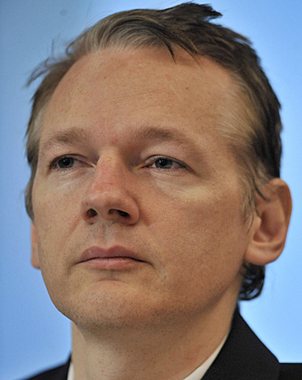
Immediately questions were raised about the U.S. military’s excessive use of force, national security, foreign relations, and a number of other matters included in the first wave of cables reaching the public eye.  Vice President Joe Biden, Secretary of State Hillary Clinton and the State Department (with the help of Interpol) set out to try to silence Assagne.

But the response was starkly different in Mexico. Two days after the first WikiLeaks came out communications were released on U.S.-Mexico relations, the violence problem in Mexico and our armed forces’ internal debacles, as well as President Hugo Chávez’ involvement in supporting former presidential candidate Andrés Manuel López Obrador in the 2006 elections.

Some U.S. colleagues immediately contacted me commenting on “the hard hit” Mexico was taking from Assange’s open communication and free speech antics. However, Mexicans did not start tweeting or commenting on facebook and other social media sites about this. The usual suspect bloggers were mildly impressed and Mexico’s government reaction to the leaks was as agitated as a couple of turtles taking a nap.

The reason for this difference in general reaction between U.S. and Mexico’s society is both simple and strikingly depressing: we’ve lost hope and trust in our political system and its players. We’ve lost the capacity to be amazed by our own state’s inadequacies.

When they leaked that the government was in danger of losing control of some regions of Mexico to organized crime; when they told us that Venezuela’s Head of State was involved in the leftist movement in Mexico; when we read that U.S. consular officers were concerned with President Felipe Calderón’s ability to lead, all Mexicans could say was “tell me something I didn’t already know.” Corruption and inefficient government unfortunately are no longer a surprise to us. In a world where perception is reality, the fact that WikiLeaks told us these things maybe made them more official, but it wasn’t something we didn’t already feel and had been talking about for decades.

So to all Americans I say this: enjoy and value the fact that you can still be amazed when Assange tells you about disappointing activities going on behind the scenes in your political system and institutions. When this becomes a norm and it actually gets boring to hear about it for the nth time, that’s a sign for you to be really concerned.

*Arjan Shahani is a contributing blogger to AmericasQuarterly.org. He lives in Monterrey, Mexico, and is an MBA graduate from Thunderbird University and Tecnológico de Monterrey and a member of the International Advisory Board of Global Majority—an international non-profit organization dedicated to the promotion of non-violent conflict resolution.

John Lennon Forever

Standard

Today we observe the 30th anniversary of John Lennon’s untimely demise.

Today more than ever: You may say I’m a dreamer but I am not the only one.  I hope someday you will join us and the world will live as one.

Mexican heroes we shouldn’t have

Standard

Here’s a link to my most recent article on AQBlog, titled “Mexican Heroes we shouldn’t have”
http://americasquarterly.org/node/2026
Date published: December 8th, 2010

I hope you find it interesting.

Here is a copy of it:

_________________________

On November 13a group of drug dealers approached Don Alejo Garza Tamez in his ranch on the outskirts of Ciudad Victoria, in the troubled border state of Tamaulipas. They threatened Don Alejo and demanded that he hand over his land, which given its strategic location would have been used to harbor narcotic trafficking operations. They told him he had 24 hours to vacate the premises on his own free will or they would take the ranch using deadly force.

After the criminal group left, the 77-year-old businessman rounded up all ranch workers and asked them to go home for a couple of days, assuring them that nothing bad would happen. A hunter by trade, Don Alejo spent the rest of the day cleaning his guns and rifles and transforming the ranch into a trench.

When the drug dealers came back the next day expecting Don Alejo to give up at the sight of their heavy artillery, they faced a fierce combatant who gunned down at least four of them before taking a deadly hit. The criminals who survived the exchange escaped in their trucks leaving a dirt trail and the bodies of their friends behind.

What is most relevant of this story is not the fact in itself, but what it inspired and what it symbolizes for a tired and disenfranchised nation. The story of Don Alejo made the headlines of all major national newspapers. Respected journalists like Denise Maerker and Ciro Gomez Leyva were quick to hail him as a folk hero. In just a couple of days, stories about him hit the usual social media websites and today the letters “don a” are enough to bring up his full name as the first hit in Google Mexico’s instant search bar. Norteño music bands have already dedicated at least three songs to him and his story has spurred up a national debate about the right to carry weapons for self-defense.

Don Alejo was undoubtedly a brave and principled man. He most likely knew how his story would end and he faced death with his head held high. He didn’t call his family to warn or worry them and he made the decision of not placing his workers in danger. He faced what has become the largest threat to all of the nation’s livelihood and well-being and gave his aggressors a lesson many in this country would wish they had the courage to administer.

The problem is that Don Alejo is a hero we should not have to have. If Mexico continues to claim that it is not a failed or failing state, we (not just the government but society as a whole) have to prove that we can fix our law enforcement so that people like Don Alejo have an alternative to picking up a hunting rifle and using it to defend their property. We have to clean up our police force and they have to regain the trust of the citizenry. We need to contain and establish boundaries with regards to what (if anything) we are willing to tolerate from criminal organizations.

Don Alejo is a people’s symbol but he should also serve as a warning to government in order for them to get their act together and protect their constituents. He should be a wake-up call to all of us in order to demand more and actively participate in strengthening our institutions in order to rescue our country. An eye for an eye and a gun for each of us cannot be the answer. The organization “La familia Michoacana” was born under the ideal of taking justice in their own hands and they are now one of the most dangerous groups of criminals in the country. When people find that tallion law is more effective than rule of law, structured society is at a fragile state.

*Arjan Shahani is a contributing blogger to AmericasQuarterly.org. He lives in Monterrey, Mexico, and is an MBA graduate from Thunderbird University and Tecnológico de Monterrey and a member of the International Advisory Board of Global Majority—an international non-profit organization dedicated to the promotion of non-violent conflict resolution.

Depto. de Estado Americano: en el hoyo y cavando

Standard

Hillary despotricando como quinceañera enojada con su novio, Obama nombrando un zar antileaks, amenazas de muerte a Assagne, ataques de hackers en contra del wikileaks y Amazon y PayPal cruzando los brazos. Interpol haciendo el ridículo a nivel internacional persiguiendo a alguien supuestamente por “sex crimes” cuando en realidad lo que quieren es callarlo.

Leaks intrascendentes respecto a México, más de lo que ya sabíamos… México en riesgo de perder la guerra contra el narco, Chávez amigo del Peje y conflictos dentro de las fuerzas armadas: ¿cuál es la novedad?

Este par de párrafos son una sinopsis de la semana pero la reciente nota en el Huffington Post: http://www.huffingtonpost.com/2010/12/04/state-department-to-colum_n_792059.html sí es novedad en lo mediocre que resulta la estrategia de respuesta del Depto. de Estado a una situación que evidentemente se les salió de las manos.

En una nación que presume libertad de expresión NO puede ser que por medio de un comunicado (que luego negaron) adviertan a alumnos de una de las universidades más prestigiosas del país que hablar de Wikileaks podría poner en riesgo sus futuros profesionales.

El punto no sólo es que la táctica es pueril, sino que la respuesta que genera es en detrimento del Departamento de Estado. Me recuerda a “No pienses en un perro azul”… ¿En qué pensaste? ¿En un perro azul?

Si antes ya ocupaba el número 1 en los trends de todos los medios sociales, después de estas declaraciones lo único que lograrán es echarle más gasolina a la discusión, añadiendo a la plática el hecho de que el Depto. de Estado amenaza a la gente respecto a su futuro en el servicio público. La verdad dudo mucho que alguien que esté hablando propositivamente respecto a wikileaks hoy tenga muchas ganas de pedir chamba en el Depto. de Estado.  

AQBlog me ha pedido que escriba sobre wikileaks y México… ya les pasaré la liga pero les anticipo: la verdad el escándalo es mucho más por propagación mediática que por contenido que nos impresione. Somos una nación que bastante conoce las fallas en nuestro sistema y será muy dificil que nos sorprendan.

Wikileaks and Amazon

Standard

Under pressure from US government and exercising their rights as a private firm, Amazon caved and stopped hosting Wikileaks.  Even if it is their legal right to do this, a company like Amazon should take a stand for free speech. Also, they should provide all parties the right to access and continued service, provided that they do not publish anything illegally or going against universal values.

Amazon was never going to be liable for hosting Wikileaks. At most, if the US legal system acted as a puppet for the Executive branch, they would order a Cease and Desist. Only then would a move like the one recently pulled by Amazon be justified but not before that.

Echoeing the now famous tweet by Assange: “If Amazon are so uncomfortable with the first amendment, they should get out of the business of selling books.”

NSM achieves what terrorism could not

Standard

  It’s all over the news. The interpol is now actively searching for Julian Assagne, founder of Wikileaks. See article here: http://www.eluniversal.com.mx/notas/727071.html

Since they know there is no hope of prosecuting him for what wikileaks actually does (and does extremely well), they’re pulling an Al Capone on him. Apparently an individual’s sexual deviance is now enough for Interpol to issue a red notification, an international apprehension order.  They couldn’t get Capone for racketeering so they got him on tax evasion. They can’t get Assagne for telling the truth and leaking official documents (because the fact is they know he’s not responsible for stealing this information and they have not been able to find those who would be accountable for actual crimes), but they will now attempt to get him on the “grave crim”e of erotic mischief.

There is a lot more to this story than Assagne’s ability to stay underground (let’s see for how long) or legal proceedings. The real juice behind this is the fact that Web 2.0 and new social media have been able to do something that not even international terrorism had been able to: hit government hard enough to actually get them trembling.

When the twin towers got hit, the end target was to collapse the US financial system. To a certain extent, the terrorists were succesful but the hit was quickly returned in the form of smart bombs and air raids over Afghanistan and Iraq. The US economy was hit but kept afloat, in great part through activating the system with war machine revenues.

When Assagne setup Wikileaks and got his hands on a number of confidential documents (most recently the now famous US diplomatic cables) and shared them with the world, the target was truth. And truth hurt the US government (and others implied in these cables)… it hurt it bad enough for Hillary Clinton to pay attention and react.  The executive branch of US government is in a more fragile state today than they have been as a result of terrorist attacks.

The good news is that no innocent lives will be lost due to wikipedia and a nation which prides itself on the pursuit of truth above all, will get a dose of reality.  The even better news is that a site like wikileaks is not and never will be dependant on its founder’s personal life to remain afloat. Like the rest of Web 2.0 and under concepts such as open sourcing and open innovation, wikileaks may have been founded by Assagne but it (like truth) belongs to the world.

The state of pot in 2020

Standard

A great article on WaPo. I ‘highly’ (pun intended) recommend it.

”To explore what that legalization might look like from the vantage point of a decade in the future, The Washington Post’s Michael S. Rosenwald pored through reams of government, academic and corporate studies, and talked to experts on marijuana, drug legalization, Prohibition and marketing.

This, then, is a reported fantasy, a look at the State of Pot in America in 2020, based on research conducted in 2010.”
http://www.washingtonpost.com/wp-dyn/content/article/2010/10/22/AR2010102205573.html