A Window of Opportunity for Education in Mexico

Standard

Here is a link to my latest article on AQBlog, titled “A Window of Opportunity for Education in Mexico“, published on February 27th, 2013. Please feel free to visit and comment. Here is a verbatim copy of it in case you prefer to read it on my personal blog, though I recommend actually going to the site because of additional content, other blogger’s articles, etc.

On Monday February 25, having achieved the needed support in Congress, President Enrique Peña Nieto put into effect an education reform that will transform the public education system at its core. If enacted correctly, the reform will allow the country to take important steps forward and proactively tackle one of its most relevant social issues.

The reform calls for a new autonomous government institute to be created, with the sole purpose of strengthening and professionalizing the teaching profession by establishing a talent performance system that will ensure that teaching positions are awarded based on merit and not discretional criteria. The system includes periodical evaluations for the public system teachers, a change that undoubtedly will generate resistance from teachers who have become quite comfortable in mediocrity under the protection of a backwards thinking union that is too strong and powerful for its own good.

The new institute will also be responsible for ensuring that a trustworthy database comprising numbers of schools, teachers and students is created and kept up to date. This administrative responsibility also used to be in the hands of the SNTE (Sindicato Nacional de Trabajadores de la Educación), who kept whatever data they had away from public scrutiny.

In what can only be interpreted as a strategy to hit them while their down, one day after Peña Nieto published the reform, the country was surprised with the arrest of SNTE’s controversial and powerful leader, Elba Esther Gordillo who is facing charges for fraud, money laundering and links to organized crime.

The case being built up by the Public Attorney’s office (PGR) highlights accusations of SNTE’s money being used to pay for purchases made by Gordillo from 2009 to 2012 in the upscale store Neiman Marcus, amounting to up to $3 million. This is not the first time questionable purchases have been made with SNTE’s money but it is the first time the government has moved against the union’s leader so decisively and surely, the only way they were going to be able to get rid of this influential character, whose position as leader of the union did not have an expiration date on it.

With the new educational reform put in place and the largest obstacle for its success removed and (at least temporarily) placed in a jail cell, the future for education in Mexico seems bright as it does for PRI and Peña Nieto, who up to now has not been able to gain public sympathy or project himself as having the capabilities to lead. If Peña continues on this path and ensures that the reform results in actions with tangible results for society, PRI will have taken a huge step toward rebuilding its political machinery and consolidating its power both at state and federal levels in future elections.

If that’s what it takes to start making much needed improvements in Mexico’s education, the nation will surely welcome the return of PRI’s perfect dictatorship. Let’s hope the trade-offs (because no question, there will be major ones) are worth it.

*Arjan Shahani is a contributing blogger to AQ Online. He lives in Monterrey, Mexico, and is an MBA graduate from Thunderbird University and Tecnológico de Monterrey and a member of the International Advisory Board of Global Majority—an international non-profit organization dedicated to the promotion of non-violent conflict resolution.

Seven lessons from Mexico’s electoral process

Standard

Here is a link to my latest article on AQBlog, titled “Seven lessons from Mexico’s electoral process“, published on July 2nd, 2012. Please feel free to visit and comment. Here is a verbatim copy of it in case you prefer to read it on my personal blog, though I recommend actually going to the site because of additional content, other blogger’s articles, etc.

With an estimate of around 37 percent of the votes, Enrique Peña Nieto’s victory in Mexico’s presidential race will be analyzed from multiple angles, including what this will mean with regard to the war on drugs, the economic model in place, relations with the U.S. and the rest of the world, and many other topics.

For the most part, Peña Nieto’s tenure will not imply radical changes in Mexico, for better or worse but the return of the Partido Revolucionario Institucional (Institutional Revolutionary Party—PRI) to power does say a lot about the way Mexico’s society thinks and operates. This electoral process has opened up an interesting window into the Mexican collective psyche. These are some of the lessons from the 2012 election.

Debates are not yet a vehicle for voter decision in Mexico.  There were three presidential debates (two official ones and one organized by #YoSoy132 to which Peña Nieto did not attend) during the presidential race. Peña Nieto’s participation in these dialogues was considered lukewarm at best. His rhetoric was empty but his poor performance was not enough to shift voter preference away from him and toward a second viable option.

We still have a long way to go to build political awareness and education. Peña Nieto’s success cannot be attributed to a strong and enriched political platform or to his superiority as a candidate over his competitors. One could not say that he is smarter, better prepared or better equipped to be president than his competitors. Peña Nieto’s success shows that Mexican voters can easily be manipulated (or convinced) through robust campaigning, a large TV presence and looks. As different media showed when they interviewed people at political rallies (for the three major candidates), a large quantity of voters had no idea of where candidates stood on relevant issues. “I trust him,” “He’s cute” and “I’ll vote for him because the other one is crazy” were some of the compelling arguments that gave Peña Nieto a victory on July 1. Sadly, we still have a long way to go to create an informed voter base. The candidate you saw more billboards and TV ads from, is the one that came out on top in voter preference.

Short-term memory plays a more important role than long-term memory. Peña Nieto won for many reasons but one of them was definitely that voters wanted to punish the Partido Acción Nacional (National Action Party—PAN) for its performance in the past 12 years and Andrés Manuel López Obrador (AMLO) for his lack of respect for the rule of law during his 2006 post-election shenanigans. Mexico was willing to forgive and forget and make peace with the PRI because as many voters put it “we were better off with PRI,” for the most part referring to the increasing levels of organized crime violence resulting from the active war on drugs set forth by President Calderón.

There is e-Mexico and then there’s Mexico. There is a clear divide among Mexicans with access to social networks and those without. On Twitter, users were appalled with the results. Even when all polls signaled Peña Nieto’s victory, Internet users were not willing to believe them. Conversations on Twitter and Facebook had been significantly dominated by AMLO and Josefina Vázquez Mota (PAN) followers.  A popular tweet on the night of the election was “I have no idea how they did it. Does anybody here know anyone who voted PRI?” For the most part, the answer was no. Peña Nieto was elected for the most part, by people who do not actively participate online. For upcoming elections, candidates should know that the segment of Internet users in Mexico will only become larger and they will need to actively engage them during the campaign.

The return of PRI does not mean the return of absolutism. This is not optimism; it’s just a very likely reality. Pessimists are evaluating the return of the PRI as a step back in our democracy because they remember the 70 years of absolutism; instead, it is yet another building block in our system which will put to the test whether or not we are a mature enough society to deal with altering power. The PRI will rule a very different Mexico from in the past. Civil society will be more vigilant and we will hold Peña Nieto accountable for his performance as president. Technology will play a significant role in maintaining a non-official discourse, with freedom of speech and free flow of information empowering a growing sector of society. Even with a party majority in Congress, Peña Nieto will have to answer to Mexicans who will either reward or punish his party in future elections.

PRI holding both the executive and a majority in Congress will be an acid test on government efficiency. Both Vicente Fox and Felipe Calderón of the PAN had a very good excuse when their effectiveness was questioned. They could just say (and many times they would have been right) that Congress was blocking their ability to operate and put forth structural reforms.  Peña Nieto will have no such excuse with a PRI majority Congress to not pass and implement the labor, energy, security and political reforms that society has demanded and that have been paralyzed by a non-cooperative legislature during the Calderón government. This will also lead us to question if Mexico’s democracy could actually work and be effective if a real system of checks and balances is in place.

Most people did not vote for Peña Nieto. There were more votes against Peña Nieto than in favor of him. Just like Calderón, Peña Nieto will preside over a country that for the most part, did not want him to be president and did not choose him. This is why last night he went on national TV to say that we should “set aside our differences and privilege our common goals […] we may have different preferences but we have something that binds us together: our love for Mexico […] we share the same challenges and must work together to overcome them.” While his inclusive rhetoric is exactly what Mexico needed to hear last night as it attempts to move forward from electoral campaigning divides, the fact of the matter is that winning by a relative majority surfaces yet again the need to implement a run-off electoral process, just like Calderón proposed to Congress (and was blocked). Given the results of last night’s election, would Peña Nieto have won in a second round of elections running only against López Obrador?

Interesting analysis of the three main presidential candidates in Mexico, by Denise Dresser

Standard

A worthwhile lecture from Denise Dresser profiling the three main presidential candidates in Mexico.

Thanks to Xipactli who shared this link with me.

The Path of #YoSoy132

Standard

Here is a link to my latest article on AQBlog, titled “The Path of #YoSoy132“, published on June. 27th, 2012. Please feel free to visit and comment. Here is a verbatim copy of it in case you prefer to read it on my personal blog, though I recommend actually going to the site because of additional content, other blogger’s articles, etc.

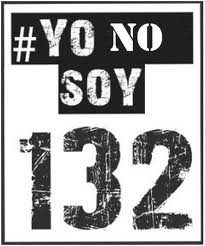
#YoSoy132 has been called many things: “the voice of a new generation;” “the Mexican Spring;” and “young people manipulated by the PRD [Partido de la Revolución Democrática, or Party of the Democratic Revolution]” are just a few. Whatever its true nature, this youth movement has left a new mark on electoral processes in Mexico—one which could shape not only the outcome but the aftermath of the 2012 Mexican elections next Sunday.

It all began on May 11 when Enrique Peña Nieto, presidential candidate of the Partido Revolucionario Institucional (Institutional Revolutionary Party—PRI), belittled a group of student protesters that had gathered at the Universidad Iberoamericana to repudiate his presence there. Peña Nieto called them a small group of rabble-rousers, accused them of not being actual students and minimized their protest to opposition made up of only 131 people.

This led to the students uploading a YouTube video showing their university IDs and claiming that their cause was shared by many more young people. The video went viral and the story spiraled into Twitter via the hashtag #YoSoy132 (“I Am 132”). Without a cohesive agenda or clarity with regards to what “being 132” really meant, people sympathized with the students and began retweeting that they too were 132.

A series of strange events followed, making the nature of the movement even less clear and more confusing. Initially, it seemed that the movement’s sole purpose was to demand objective coverage from the largest television news outlet in the country, which allegedly has given favorable coverage to Peña Nieto’s candidacy. However, allegiance to PRD presidential candidate Andrés Manuel López Obrador (AMLO) from some of the movement’s leaders despite being a nonpartisan movement, an inconsistent rhetoric of formally campaigning against Peña Nieto while calling for media objectivity, and conflicting messages from its members have left most Mexicans wondering what it actually means to state that Yo Soy 132

Students attempted to organize; they took to the streets and demanded that the second presidential debate be broadcast over the main TV channels; they held an assembly in order to look for an aligned, common vision. Judging from their concluding declaration and the following fallout of rogue mini-groups, they failed at this objective—but the movement continued to grow in a somewhat chaotic manner. #YoSoy132 was even able to hold a presidential debate on June 19 with an innovative format and the use of internet to connect different students from their homes to pitch questions to candidates. Playing it safe, Peña Nieto declined the invitation to participate.

Recently, the hacktivist group Anonymous, through its Mexico branch, published a video which calls out the federal electoral authority—Institudo Federal Electoral (IFE)—of apparent intention to manipulate the final voting tally in favor of Peña Nieto.

The “preparation for fraud” discourse has been heightened not only by Anonymous, but coincidentally by #YoSoy132 and by AMLO himself. While #YoSoy132 has been threatening that “Si hay imposición habrá revolución” (if there is imposition there will be a revolution), López Obrador has stated that he knows that the PRI is preparing a fraud but his team will be more vigilant to prevent it, similar to his accusations six years ago when he was the presidential runner-up to Felipe Calderón. To make matters more worrisome, the Ejército Popular Revolucionario (Popular Revolutionary Army—EPR) guerrilla group has recently applauded #YoSoy132 and stated that they would take AMLO at his word and support taking arms in order to avoid “a neoliberal candidate” seizing power.

For the sake of any functional democratic state, electoral fraud must be avoided. A system of checks and balances which is actually built in to the Mexican democratic system—including observers and scrutinizers, exit polls, citizen participation in the actual vote counting, and other mechanisms—seems to be insufficient. And while one should not be disingenuous and think that that these mechanisms fully prevent fraudulent practices from taking place from any candidate, a bigger danger is now present: What if #YoSoy132, Anonymous, EPR and others simply don’t like the outcome of the election because their choice did not come out on top, fraud or no fraud? What if Peña Nieto actually and fairly wins but AMLO, as in 2006, does not recognize defeat?

In the first weeks of #YoSoy132 emerging, people started comparing the movement to the Arab Spring and specifically the Egyptian deposition of Hosni Mubarak. While there is simply no comparison between the Mubarak regime and Mexico’s current political and institutional reality, there is one thing in common: Whenever a grassroots movement with no clear agenda, vision, values, or follow-through plan is able to cluster different groups together in order to eliminate or threaten a common enemy, it may be effective in damaging or removing the unwanted player from the mix—but dangerously ineffective in providing a long-term outcome which benefits all those who pulled together. Given the current state of Egypt, Mexicans should learn from this example.

Today, apparently #YoSoy132 means “I don’t want Peña Nieto to win”—but for different reasons. Some support the group because they feel traditional media should not be biased. Others like it because they want AMLO to be the next president. A few think that they support Josefina Vázquez Mota, candidate of the incumbent Partido Acción Nacional (National Action Party—PAN) by saying they are 132. Anonymous seems to want the IFE to be impartial and EPR says that being 132 means taking arms and not supporting the world’s predominant economic model. Some consider being 132 good and active citizenship; others a call to arms against the establishment.

While I applaud the awakened spirit of youth taking a more active role in this election and hope this will mean a larger young voter turnout than what was projected prior to the movement, as long as there is no consensus about what being 132 means, Yo No Soy 132 and I hope for avoidance of post-electoral violence, no matter who Mexico elects as its president this Sunday.

Pensando en deslindes…

Standard
Yo quiero que ALGUNO de los candidatos a la Presidencia de México asuma liderazgo y responsabilidad en lugar de perpetuar el juego de los deslindes. AMLO se deslinda de sus plantones del 2006, del endeudamiento del DF, de Narciso Agúndez, de Bejarano, de Padierna, de Ponce, de Imaz, del canteo de Slim, de Bartlett, del charolazo de 6 millones de dólares, … Peña Nieto se deslinda de la Maestra, de Yarrington, de Salinas, del viejo PRI…, de Montiel, de sus propios hijos, de la investigación/amenazas a estudiantes… Vázquez se deslinda de su trayectoria accidentada, de las campañas ANTI y del descaro de que el Presidente de su partido haya asegurado la chamba e impunidad de Fernando Larrazabal al darle el primer puesto en la lista de representación participativa para ser uno más de nuestros orgullosos representantes en el Congreso (mismo que después reviró para sanear y mandarlo por vía de voto popular). Quadri -aunque en realidad no perfila- se deslinda de conocer a la líder del partido que lo postula y de tratar de ligarse a la edecarne del IFE. Con esos ejemplos y estas pobres opciones, ¿cómo quieren que la ciudadanía no se deslinde de participar en el proceso electoral que es su DERECHO y OBLIGACIÓN?

De Primaveras Mexicanas. Por Francisco Ibarra

Standard

Estimados lectores: el día de ayer recibí el siguiente mensaje de parte de una persona que respeto y admiro intelectualmente como a pocas. Francisco Ibarra es un ciudadano hidrocálido y buen amigo al que tuve el gusto de conocer durante mis estudios de maestría. Sus breves líneas compartidas bajo el título de “De Primaveras Mexicanas” son testimonio de un proceso mental equilibrado, razonado y fundamentado. Espero disfruten su lectura como yo lo hice. Paco, un abrazo hermano.

De Primaveras Mexicanas, por Francisco Ibarra

 Hace un par de días, leí en el muro de Facebook de un amigo un mensaje que decía: “¿Será este el inicio de la primavera mexicana?” Comparaba, con ese breve texto, el movimiento social que dio fin a casi 30 años de presidencia de Hosni Mubarak en Egipto, con las marchas en contra de Peña Nieto, que ocurrieron en México el fin de semana. No milito en partido político alguno y tengo excelentes amigos en todos ellos y, desde esa libertad, me gustaría compartir con ustedes algunas reflexiones sobre el tema.

 En primer lugar, la participación ciudadana debe celebrarse. La asistencia a marchas y protestas de cualquier índole es un derecho que habla muy bien de nuestra perfectible pero funcional democracia.

Quienes opinan en contrario han sido acallados por los cuatro candidatos (sí, los cuatro) que rápidamente hicieron público su compromiso con la libre expresión de las ideas. México requiere de una ciudadanía más activa y participativa y, por ello, debemos aplaudir manifestaciones como la de los estudiantes de la Ibero.

 En segundo término, y sobre la forzada comparación entre lo ocurrido en Egipto y lo que ha pasado en tierra Azteca, quisiera preguntarles:

en un país donde podemos protestar de cuanta cosa nos venga en gana, contamos con elecciones libres, existe un congreso que se opone fuertemente al ejecutivo, hay gobernadores de todos los colores y la competencia electoral es sumamente intensa, ¿podemos igualar el movimiento que marcha para mostrar su desprecio a Peña con el de la “primavera árabe”, donde los ciudadanos no tuvieron otra opción que tomar las calles para derrocar al tirano? Me parece evidente que la respuesta es negativa y, por tanto, habrá que tomar estas marchas como lo que son: una expresión política más, dentro de las muchas que hay y habrá en un país tan plural como el nuestro.

 Un tercer punto que debemos analizar es cómo el candidato de las izquierdas, AMLO, ha buscado – hábilmente, por cierto – apropiarse de las marchas estudiantiles. ¿Por qué si aparentemente en las encuestas (GEA-ISA) no le ha dado resultados?

 Como contexto recordemos que en 2006, al perder la elección, López convocó a una movilización social para (1) tomar el Congreso de la Unión, (2) mandar al diablo a las instituciones electorales, (3) impedir que Felipe Calderón tomara posesión como presidente y (4) cerrar Paseo de la Reforma por un largo tiempo. Desde mi punto de vista, este astuto político está preparando terreno para algo muy similar. Ante una victoria de Peña, su discurso será que los de arriba lo impusieron porque, aunque haya obtenido mayoría relativa, el pueblo votó engañado por los medios de comunicación. Si Peña gana por menos del 50%, significaría entonces que la mayoría de los mexicanos no lo quiere y habría que convocar a los estudiantes a tomar las calles para impedir que juramente. ¿Democracia? No mientras esté controlada por Televisa, nos dirán, como si estuviéramos imposibilitados a decidir.

¿Suena descabellado? No creo. Mediante una serie de medidas legales, el PRD busca impedir en el IFE el conteo rápido con lo que se retrasaría considerablemente la declaración de un ganador. Algo preparan y, ya hemos visto, son muy buenos en ello.

 En fin, que ellos hagan su lucha que nosotros haremos la nuestra. Yo me siento mayor de edad y si voto por tal o cuál candidato no lo haré porque Televisa, TV Azteca, La Jornada, Carmen Aristegui, Reforma o Proceso lo promuevan, sino por convencimiento propio. Ante las declaraciones de algunos, los invito a separar la aplaudible expresión ciudadana de la reprochable manipulación política. Insisto en que debemos debatir, opinar y contrastar ideas pero, sobre todo, y ante los últimos acontecimientos, recordar que en democracia, la mayor marcha, la más efectiva manifestación y la más sonora protesta es la que se hace en las urnas, no en las calles. Respetemos pues, lo que la mayoría decida.

 Paco Ibarra

La lógica de López

Standard

Ya sé que más de uno empezará a decirme que tengo agenda oculta, que no es cierto que no tengo afiliación a algún partido, etc. pero les comparto mis ideas, opiniones y la información que publico en este espacio porque es mi convicción personal hacerlo, porque creo que estamos en un país al que queremos y que necesita de mucha ayuda… y porque me preocupa ver falsas esperanzas, engaños y manipulación DE CUALQUIER FUENTE que venga. Y se los digo honesta y abiertamente: no es el único pero uno de los campeones de la manipulación en estas elecciones es López. Por eso en esta ocasión me centro en este candidato.

Reservo derecho de hablar de otros en un futuro, así como de cambiar de opinión respecto a cuál de todos los candidatos es el campeón de las mentiras, de la deshonestidad y de la incongruencia… todavía hay mucho espacio y tiempo para que otros le roben el puesto y vaya que hay talento para hacerlo.

Por mi formación preparatoria y universitaria he aprendido a valorar la lógica fundamentada, los argumentos validados y la justificación de aseveraciones en base a fuentes de información confiables. También me consta que hoy en día los medios de comunicación masiva en México han perdido credibilidad porque al igual que muchos de los medios estadounidenses (especialmente Televisión), han entendido y capitalizado sobre el poder y valor que tienen para influir en la opinión pública. De tal suerte existen cadenas como FOX News con agenda partidista bien identificada en Estados Unidos y en México no nos quedamos atrás. En el caso de México además de los intereses monetarios de por medio, habría que añadir otros factores de sometimiento. Justamente el día de hoy el titular de FUNDAR mencionaba en una entrevista en MVS que la relación medios-fuentes de poder es complejísima en México y que hay territorios en que los medios someten a los partidos políticos y viceversa.

Habiendo dado algo de contexto, quisiera compartir con ustedes una serie de reflexiones en torno a recientes posturas y declaraciones del candidato López Obrador, con la intención de dar claridad y veracidad en un entorno plagado de desviaciones, acusaciones y argumentos débiles…y que cada quien tome sus propias decisiones.

LA ACUSACIÓN DEL BLOQUEO GENERALIZADO A AMLO por parte de los medios de comunicación

López habla de la mafia del poder que le bloquea espacios y que manipula a los mexicanos para que voten por Peña Nieto. Existen muestras claras para decir que Televisa ha elegido apoyar a Peña Nieto. No las niego ni las minimizo… pero si López quiere acusar a los medios de ser tendenciosos que sea claro y diga las cosas como son: los medios son tendenciosos, pero los de mayor impacto y alcance no se fueron con él y por ende “son parte del compló”… pero él juega al mismo juego. Basta ver/escuchar MVS televisión y radio, leer La Jornada, Reporte Indigo y SDPNoticias (por mencionar a algunos) y tener dos dedos de frente para notar la tendencia de dichos medios en apoyar ciegamente a López. Dígalo claro, candidato: cada medio con su gallo y a usted le tocó bailar con la más fea (y para que no se confundan, al decir “la más fea” no me refiero específicamente a Carmen Aristegui).

DOS EJEMPLOS DE LOS MEDIOS DE COMUNICACIÓN AL SERVICIO DE LOPEZ

Reporte Indigo publica http://www.reporteindigo.com/reporte/mexico/el-factor-quadri-0 , una pieza que vale la pena leer por múltiples razones. En torno a la intención de confrontar a López con respecto a su hipótesis de “nadie me quiere, todos me odian, mejor me como un gusanito” que arroja a los medios, resalto:

• Dice que Quadri “mandó a los war rooms” a los líderes del PRI y del PAN. Menciona que a ellos les preocupa mucho “el factor Quadri.” El artículo omite que el factor Quadri le preocupa a AMLO y que hay más razones para que le preocupe a él que a los otros dos candidatos. En una reciente encuesta pregunté a los lectores de este blog a quién le quita votos Quadri y la respuesta fue contundente: a AMLO. Quadri atrae al joven alterno, al intelectualoide, al que está harto del aparato político desgastado… En síntesis, Quadri atrae al target audience que había acaparado AMLO con su estrategia de decir que el PRI y el PAN eran más de lo mismo, con el discurso “PRIAN” y su promesa de una República Amorosa. No niego que Quadri se haya puesto después del debate en el mapa y que seguramente ganó algo de respeto de parte del resto de los candidatos pero me mofo de la tendencia que muestra al hacer parecer que al que más le afecta Quadri aparentemente ni le importa.
• Grupo Indigo declara ganador del debate a AMLO, con un segundo lugar a Quadri y a Vázquez y Peña disputando el último lugar. ¿Qué debate vieron los amigos de Reporte Índigo? Da risa que ellos mismos ponen en evidencia las tendencias de los distintos medios al decir que sólo ellos y Carmen Aristegui declararon a López como ganador. Es una conclusión simplista y habría que entrar a fondo para ver que pregunta precisa hicieron en cada uno de los medios para que RI diga que “los declararon ganadores” pero independientemente de ello la tendencia del medio y los consumidores que lo consumen se comprueba. La realidad: no existe consenso en los medios respecto al ganador del debate y era de esperarse porque cada uno tiene su agenda y cada uno atrae a distintos consumidores.

Las cosas como son: Reporte Índigo no es y nunca ha sido, un medio de información noticiosa. Es un espacio de opiniones disfrazado de periódico. En la mayoría de los casos su cobertura no cita fuentes, presenta afirmaciones sin sustento y cuestionable. Es una publicación MUY BUENA en términos de diseño y definitivamente vale la pena visitarla y consumirla… pero no comamos pizza pensando que es una ensalada.

Aprovecho para reiterar que yo no sé si hubo un “ganador” indiscutible del debate. Creo que más importante que decir si alguien se sacaría la medalla de oro, sería ver qué candidato sacó mayor provecho al debate. Es decir, ¿qué candidato logró atraer más simpatizantes o cambiar la decisión de voto? Mi opinión personal es que el que más utilidad sacó del ejercicio fue Quadri y el que menos fue AMLO pero es una apreciación subjetiva. En realidad, esta pregunta será difícil de contestar con encuestas parcializadas u opiniones y la mejor aproximación que podríamos tener estará en la decisión que tomemos juntos el 1ero de julio… a menos que los que pierdan aleguen que les robaron la elección (se pone uno nostálgico del 2006 y casi casi se me sale la lagrimita de la emoción). Pasemos al siguiente ejemplo:

Después del debate, La Jornada raudo y veloz le dio espacio a la pieza de Enrique Galván Ochoa que los invito a leer en http://www.jornada.unam.mx/2012/05/09/opinion/008o1eco . La tesis de la pieza en resumen es que Quadri es el nuevo elemento de negociación de Elba Esther Gordillo hacia el PRI y el PAN. Galván asegura (de nuevo, sin citar verdaderas fuentes) que Quadri declinará después del segundo debate a favor del mejor postor entre Vazquez Mota y Peña Nieto, el que más le llene el ojo a la maestra. Algunos apuntes al respecto:

• Sin duda la sombra (sombrota) de Quadri es el partido que lo postula. Coincido con la opinión de AMLO en torno a Elba Esther. La señora es un cáncer y ha obstaculizado el progreso del sistema educativo mexicano. No es la única responsable, pero es de las principales. El rol indiscutible del PRI en mantener al pueblo subyugado e ignorante para su beneficio durante más de 70 años es notable y tema para otro momento de expresión. Con todas sus letras: la razón principal por la que Quadri no puede ser presidente es el partido que lo postula.
• La pieza de Galván se alimenta de la teoría de conspiración de “todos unidos contra López Obrador.” Si se supone que Quadri va a declinar a favor del PRI o el PAN, ¿entonces por qué se supone que están tan preocupados por el efecto Quadri? En su defensa, son dos medios diciendo dos cosas opuestas, pero es risorio que en ambos casos el contendiente del PRD es el que sale bien librado y la tierra le cae a los otros tres.
• La hipótesis de Galvan es posible e interesante aunque no probable. Quisiera que me dijera cómo es que declinar ayudaría al PANAL a mantener su registro. La gente no votaría por un candidato que ya no está postulándose para la presidencia. Declinar no tiene ningún sentido si la intención de Elba Esther es retener el registro del partido que lidera.
• Adicionalmente, si es que Quadri declinara, sería ingenuo pensar que sus simpatizantes automáticamente comprarían la candidatura de la persona a favor de la cual se pronunciara. El appeal de Quadri es que no es político. Que es distinto y conecta con quienes no nos dedicamos a vivir de los impuestos de otros. Si mañana nos dice “vota por Peña Nieto” pierde TODO lo que ha sido atractivo de él y su propuesta.

Un último apunte antes de pasar al siguiente subtema: cabe mencionar que el espacio o tiempo aire que da cada medios a cobertura o mención de un candidato u otro no refleja necesariamente la la preferencia/tendencia/canteo del mismo. De ser así, cualquiera diría que al dedicarle estas líneas a López, soy su fan #1.

EL NO-EQUIPO DE AMLO

Recientemente, el periódico EL NORTE dedicó una página a ocho columnas de su sección principal a entrevistar a Poncho Romo vendiendo a López como la mejor opción a los lectores regiomontanos. La pieza se llama “Por qué voy con AMLO” y puede consultarse aquí http://busquedas.gruporeforma.com/elnorte/Documentos/DocumentoImpresa_libre.aspx?ValoresForma=1173837-325,PonchoRomo&md5libre=7acc43048f8c2f960c6d92011bb21731

El objetivo principal de esta pieza es desvincular a AMLO de sus aliados incómodos. Menciona a René Bejarano, Dolores Padierna y Fernandez Noroña pero valdría la pena añadir de entrada a Gustavo Ponce y Carlos Imaz. En el artículo y en el debate presidencial, López pinta su raya y dice “ese no es mi equipo.” De hecho el momento de lucidez y la estocada principal que AMLO dio en el debate fue cuando le dijo a Peña “¿Cómo son las cosas?, ¿cómo es este mundo? Ponce, secretario de Finanzas en el tiempo que fui jefe de gobierno, está en la cárcel, lleva 8 años; Bejarano también estuvo en la cárcel, y usted que fue secretario de Administración en el gobierno de Arturo Montiel, está aquí… de manera inexplicable o explicable si vemos lo que voy a mostrar.”

Inteligente el candidato en distanciarse de las lacras previamente mencionadas. Deshonesto, pero inteligente. Previo a su rediseño como plataforma de campaña el sitio de AMLO http://www.gobiernolegitimo.org.mx/ listaba a su gabinete legítimo. Ya no está ligado en el sitio principal pero la página vieja sigue en línea y puede consultarse aquí http://www.gobiernolegitimo.org.mx/secretarias/

En este espacio destaca la honorable presencia de Martha Elvia Pérez Bejarano, Secretaria para el Estado de Bienestar. ¿Quién es Martha Elvia Pérez Bejarano? Prima hermana del Señor de las Ligas, ex – titular de SEDESOL en el DF. ¿Esto comprueba que López está ligado a la finísima pareja Bejarano-Padierna? No. Yo no quisiera que me juzguen por mis primos (no se enojen familia, los quiero pero cada uno de nosotros somos diferentes personas).

Las reuniones en que participaron AMLO, Ebrard y Dolores Padierna durante el proceso primario de la izquierda previo a seleccionar a López como candidato tampoco comprueban NADA… Pero esa es la bella ironía: si López pretende atacar a Peña en el debate con fotos de él y Carlos Salinas o Montiel, no puede negar que la misma lógica de asociación puede utilizarse en su contra al afirmar que sigue siendo asociado a los miembros del partido que lo postula hoy como candidato a la presidencia. Insisto, el punto no es afirmar que Peña está libre de pecado, que no es del mismo PRI que controló las elecciones o que no es aliado o lacayo de Salinas. El punto es madurar la discusión y decirle al candidato que su lógica es falaz si pretende que compremos sus embates pero no lo midamos con la misma vara. Y no, no se me olvida el Moreirazo como tampoco se me olvida el episodio Bejarano.

A Alfonso Romo lo convenció que López le dijera “ese no es mi equipo.” Ponchito, resultaste muy fácil de convencer.

NO ESTOY EN CONTRA DE LOS ADINERADOS SINO DE LA RIQUEZA MALHABIDA

En su más reciente libro, en múltiples foros, López habla de la mafia del poder que lo controla todo en México. Dice López que entre Televisa, BIMBO y otras empresas (pero Televisa principalmente) se orquesta “el pillaje nacional.” Dice que no está en contra de los ricos, sino de la “riqueza malhabida” (whatever that means) pero no descalifica a su aliado y a uno de los hombres más ricos del mundo: Carlos Slim. Y quien lo niegue no tiene que irse nada lejos para ver la asociación si sabe quién es Miguel Torruco Marqués, propuesto para ser el Secretario de Turismo en el gabinete de López http://lopezobrador.org.mx/secciones/gabinete/ Si les da flojera hacer un Google Search: Torruco es consuegro del magnate de las telecomunicaciones… por eso no es sorpresa que AMLO hable del duopolio televisivo y prometa que si gana Slim podría tener su canal de televisión (ver múltiples medios y declaraciones al respecto… no voy a listarlas aquí a todas).

¿Se beneficiaría México de mayor competencia en la televisión abierta? DEFINITIVO. Pero si López dice estar en contra de la riqueza malhabida, Señor candidato sea serio: no hay mayor ejemplo en México de riqueza malhabida que la que obtuvo Carlos Slim cuando EL PRI que usted tanto repudia le puso en bandeja de plata el monopolio de la telefonía en México. Si lo que quiere es ser congruente no se vale que lo que está mal para Televisa esté bien para Telmex. Como tampoco de vale que nos diga que quiere modernizar el sector energético al mismo tiempo que se mete en la cama con el SME.

LA CEREZA EN EL PASTEL: EL INTERNET SIN APARATOS

En el primer debate presidencial López dijo que quería darnos a todos internet “pero sin aparatos.” Que a toda madre… es la nueva tecnología que nos permitirá a todos entrar a sitios porno de alta velocidad sin tener que usar computadora, Smartphone o tablet. ¡López nos trae el futuro, muchachos!

En síntesis

Concluyo y repito porque ya han caído los seguidores de AMLO a quejarse: NO DIGO QUE LOS OTROS CANDIDATOS SEAN ANGELITOS. Lo que comparto en estas líneas es la ironía en los intentos de López de presentarse como alguien diferenciado al mal común en nuestra clase política siendo él uno de los portadores más volátiles del virus.

Es irónico que uno de los taglines de la campaña de AMLO sea “¡Despierta!” si los amigos de AMLO no quieren que despertemos a los argumentos aquí expuestos también. Si lo que quieren es prevenir que vuelva el PRI al poder, se vale. Pero díganlo así.

Digan que no quieren que vuelva al PRI y que consideran que el candidato de izquierda que tiene los medios de comunicación menos populares apoyándolo, el que tuvo a la Ciudad de México rehén con su plantón para prevenir una guerra civil en México, el candidato que es patrocinado por Carlos Slim, el que apoya al SME y que a su parecer no tiene NADA que ver con Padierna, Bejarano, Ponce, Fernadez Noroña e Imaz, es para ustedes la mejor opción. Se vale.

¿El efecto QuadriNader?

Standard

En el 2000, Ralph Nader fue candidato presidencial en Estados Unidos por una coalición de partidos verdes. Ese fue el año del controvertido resultado en la contienda que llevó a cuestionar el sistema de colegio electoral en Estados Unidos y acabó poniendo a George W. Bush en la presidencia. Era evidente que Nader no tenía posibilidades de ser elegido PERO su participación sí fue instrumental para (sin que fuera su objetivo) quitarle votos a Al Gore y poner en evidencia una vez más, lo poderoso que puede ser el razonamiento del “voto útil”. De haber sido una batalla entre dos candidatos solamente, Gore no sólo hubiera obtenido la mayoría del voto popular sino también la presidencia.

Ayer presenciamos el primer debate presidencial de las elecciones del 2012 en México. Aunque fue entretenido en su momento, no quiero meterme en los siguientes temas a profundidad (por ahora):

  • La edecarne Playmate del IFE
  • El formato pobre en términos de tiempos y sistema de elección de preguntas
  • La pésima producción del programa
  • La marihuana que parecía haberse fumado la presentadora Lupita
  • Las pobres elecciones en corbata de 2 de los candidatos

Esto es lo que sí quisiera discutir:

Prácticamente todos los medios y redes sociales están repartiendo puntos positivos entre Quadri y Vázquez Mota. Aparentemente quien más provecho le sacó al ejercicio fue Gabriel Quadri, que se pone después de un par de horas de argumentos y propuestas, en el mapa electoral. No, Gabriel Quadri no será Presidente PERO ayer sí ocurrieron un par de cosas que vale la pena considerar:

  • Es muy probable que el PANAL mantenga su registro. De ser así, el intelectual habrá hecho su chamba y la maestra estará muy agradecida.
  • Los jovenes que habían perdido esperanza en la contienda regresarán a las urnas para darle su voto al “candidato hipster.” Creo que su mayor apoyo vendrá de personas que de otra manera no hubieran votado o hubieran anulado su voto que de gente que haya cambiado de candidato preferido.
  • La composición porcentual del resultado en las elecciones habrá cambiado significativamente ya que probablemente Quadri superará el estimado de 1% de los votos.
  • Quadri tiene garantizado un futuro político si quisiera tomar la opción. Con o sin el PANAL, el candidato mostró madera para tener posibilidades de ganar una posición en la Cámara de Diputados o hasta el Senado.

Nadie puede negar que la estrategia de Quadri funcionó. Es cierto, es más fácil ser el candidato al que nadie va a pelar ni atacar cuando estás en un debate… pero en las elecciones pasadas Roberto Campa estaba en una situación similar y no la supo aprovechar. En lo personal Quadri no me impresionó pero puedo entender por qué a muchos sí. Fue uno de dos candidatos que trajo propuestas a la mesa en lugar de palabras vacías. Entre los cuatro es definitivamente el más elocuente y al no tener trayectoria política pasada, no tiene cola que le pisen.

Despúes de lo que vimos anoche, la verdader pregunta interesante es: ¿será la participación de Quadri una versión mexicana del efecto Nader y de ser así, a cuál de los otros candidatos le perjudica más su éxito en el debate de ayer?

Estimados y siempre valorados visitantes de este espacio, ¿qué piensan al respecto?

De antemano les agradezco su participación y compartir este post para que tengamos buena muestra en esta discusión.

Mexican Electoral Politics Hit Rock Bottom

Standard

Here is a link to my latest article on AQBlog, titled “Mexican Electoral Politics Hit Rock Bottom”, published on Apr. 17th, 2012. Please feel free to visit and comment. Here is a verbatim copy of it in case you prefer to read it on my personal blog, though I recommend actually going to the site because of additional content, other blogger’s articles, etc.

The 2012 electoral process is the most uninspiring we’ve seen in recent history. Therefore it’s no surprise that Mexican society is increasingly disenfranchised with the political system. In fact, trust in the political elite is at an all-time low. Where interest groups saw possibilities of working hand in hand with the government in 2000 and 2006, the division between those governing and those being governed grows day by day.

The age group most alien to the electoral process this year will be young adults. A recent UNDP-sponsored study carried out by the Universidad Autónoma Metropolitana (UAM) posits that 7 out of every 10 voters ages 18-29 will not turn out to vote due to “disenchantment with Mexican democracy.” Enrique Cuna Pérez, the head of the sociology department at the UAM, points out that Mexican adolescents do believe in democracy but not in the way it is implemented in the country. “Young people are not shying away from democracy as a system, they are shying away from Mexican democracy. They consider themselves as democratic people. They understand the importance of voting but they are not willing to participate in Mexican democracy as it stands today,” says Cuna.

There are many reasons for this. For one, people are finding it harder to believe in and rally for the different candidates. The turn that political campaigns have taken—toward destructive criticism, finger-pointing and whining—is far from inspiring. Since the actual political platforms and proposals show nothing new, candidates are focusing on projecting their persona, trying to get people to believe in them, but they are doing it by saying “you can’t believe in the other candidates” as opposed to showing the country why they are fit to lead.

Enrique Peña Nieto, who according to the latest BGC-Excelsior poll leads the race at 50 percent of voter preference, is doing what he does best: photo-ops with as little speech as possible in the different states he visits. He continues to be the one to beat, though the reason is based more on publicity saturation than substance. Doing what his Partido Revolucionario Institucional (PRI) does best, towns all over the country are now flooded with enormous billboards showing the candidate as a man of the people, hugging an over-eager supporter.

Josefina Vázquez Mota’s party, the ruling Partido Acción Nacional (PAN), has recently launched a tactical attack toward Peña Nieto’s credibility, running radio and television spots that label him a liar based on commitments made during his tenure as governor of Mexico state and presumably did not deliver on. While this may be effective in bringing Peña Nieto’s numbers down, the campaign does nothing to engage young voters or to build up a constructive conversation on the future of the country. The candidate will likely use the upcoming presidential debate to take a stab at Peña Nieto’s list of undelivered promises.

And Andrés Manuel López Obrador? He’s been gradually abandoning his more moderate stance and become militant and combatant. Slowly but surely, we start to see the López of old. Worried about the growing trend of this election becoming a two-person race and himself being relegated to a respectable—but distant third—player (the same poll places him dropping to 20 percent of voter preference, 9 points behind Vázquez Mota), he has chosen to go back to accusing “the system” of being against him and the PRI and PAN of working together to minimize his participation in the race. Most recent outbursts include saying that the upcoming presidential debate structure somehow favors the PRI candidate and that the current PRI-PAN confrontation over Peña Nieto’s credibility is “a smoke screen to detract attention from Peña Nieto’s campaign spending.”

But the presidential race is not the only reason young people have stopped believing in Mexican democracy. A lot of it has to do with the negligence shown by the Mexican Congress, which has hijacked President Felipe Calderón’s proposed structural reforms for political means and become completely stagnant. Add to this the level of impudence shown by all parties with regard to the candidates they’ve put forward for upcoming legislative elections and you start to see why a low voter turnout is likely in 2012.

The party lists include such individuals as Dolores Padierna, wife of René Bejarano who in 2004 was the subject of a video scandal showing him taking wads of cash from a shady Argentine businessman. There’s also Fernando Larrazabal, the mayor from Monterrey whose brother Jonás until recently presumably ran an extortion scheme charging casinos for their right to operate. Emilio Gamboa was the subject of a political scandal in 2006 due to a leaked phone conversation linking him to child pornographer Kamel Nacif.  With this representing part of the future of Mexico’s Congress, it’s no surprise that young voters want nothing to do with it. 

As a result, Mexican electoral politics have hit rock bottom. The political elite would do well to stop ignoring this important trend and work to regain the public’s trust. Otherwise, Mexico’s emerging democracy could prove to be more fragile than they think.

Mexico’s Presidential Race: Running on Air

Standard

Here is a link to my latest article on AQBlog, titled “Mexico’s Presidential Race: Running on Air” , published on Feb. 15th, 2012. Please feel free to visit and comment. Here is a verbatim copy of it in case you prefer to read it on my personal blog, though I recommend actually going to the site because of additional content, other blogger’s articles, etc.

—-

The stage is finally set for the presidential race between Josefina Vázquez Mota (PAN), Andrés Manuel López Obrador (PRD/PT) and Enrique Peña Nieto (PRI/PVEM). What is about to unfold in the coming months is a barrage of party propaganda and news media stories designed to pull the undecided electorate toward one or the other candidates, but the actual content of the messages will surely show the lack of political consciousness in Mexico.

The product of a school system in crisis, a large portion of Mexico’s constituency is comprised of uneducated voters. Moreover, for those lucky enough to have gone through formal schooling, two essential things are missing: development of a widespread civic/political culture and embedding the capacity for critical thinking.  With regard to elections, Mexicans’ decisions have traditionally been based on a simplistic understanding of what candidates represent, if we like the way they talk and even their looks.

 A very young and sensationalist media also works against the creation of a politically informed voter base. Mainstream newspapers and TV networks are more interested in covering and making fun of the latest verbal gaffe by one of the candidates than really doing an in-depth analysis of the actual platforms they are running on. And the worst part is some of the current candidates have caught wind of this so their campaign focus will be less on substance and more on giving the media what they want in order to get more exposure. A secondary concern is the actual proposals and solutions to the country’s biggest challenges.

Of the three candidates, the only one who has provided public discourse with a somewhat clear and consistent direction is López Obrador. To be fair, his campaign is six years ahead of the other two but that doesn’t excuse the fact that Vázquez and Peña have been unable to effectively communicate what they stand for and what their governments would seek. They might not even be trying to do this, as they’ve found they can try to win the election through other strategies.  

Today we know that López Obrador opposes the neoliberal model and his macroeconomic policies are less focused on healthy management of public debt and more on building infrastructure. In his presidency, public spending would likely go up via populist programs, less worried about sustainable finance (the way his administration ran Mexico City). We know he opposes the military’s involvement in the war on drugs and gang-related violence, though we are not yet clear on his proposal for an effective alternative. Because he includes it in his rhetoric, we are clear on his views on supporting the agricultural sector and the ever-pervasive and violent SME (Sindicato Mexicano de Electricistas), a union which represents employees of a public company that doesn’t exist anymore. His foreign affairs policies would likely skew away from the globalization dynamic and steer more toward regional bloc building with Latin America. Somewhat ironically, being open about his platform has done very little to help AMLO gain support. According to a recent poll, his numbers have been stagnant since October 2011 despite heavy campaigning.

Josefina Vázquez Mota will use her political background and take advantage of the gender-role dynamics to position herself as the modern, socially-focused candidate. We will likely see her include education and jobs as the cornerstones of her campaign but her views on the economic model might only be inferred from her allegiance to the PAN party. On her official website, the closest thing to an actual political platform is an invitation to build a national plan through social inclusion and civil participation. Her public appearances follow suit, with statements on how we must build the nation together but lacking substance. Vázquez’ popularity has recently jumped in the polls, catapulting her as the viable alternative for voters who wish to keep the PRI from coming back to power and (at least for now), relegating López to a distant third place position. Her role in the race is being questioned by the media not for her position on any of the issues but by raising the question “is Mexico ready for a woman to be President?”

The leading candidate is still Peña Nieto but his numbers have been on a tailspin due to a series of statements that validate López’ criticism against him for being a “product” or “junk food” candidate. Of the three, Peña is the one whose positions on anything are still a complete mystery.  His public speeches have been empty and unclear. Besides representing the return of PRI to power, Mexicans have no idea what he stands for or his value proposition. He apparently opposes the ruling party’s recent administration but his platform called “An Effective State” provides nothing new, different or innovative that has not already been pushed forward by Calderón’s administration.

Why is Peña leading in the polls?  Because Mexicans do not vote based on substance. Part of his popularity might be attributed to people disappointed of the PAN alternative looking back to the PRI and thinking “we were better off back then.” Add to this Peña’s good looks and his marriage to a soap opera star which helped him gain points early on in the race. However, Peña is running out of fuel and has nothing with which to fill the tank. Until he proves otherwise, Peña is the candidate “running on empty” as López has pointed out. The possibility of either Vázquez or López catching up, is still very much on the table.

It’s too late for this presidential race, but if Mexicans are to make the right decisions in elections to come, we must invest in creating a better informed and politically conscious voter base and we can’t expect the political elite to do it for us. It’s easier for them to run on personal popularity.

*Arjan Shahani is a contributing blogger to AmericasQuarterly.org. He lives in Monterrey, Mexico, and is an MBA graduate from Thunderbird University and Tecnológico de Monterrey and a member of the International Advisory Board of Global Majority—an international non-profit organization dedicated to the promotion of non-violent conflict resolution.